
Sourcing Pneumatic Components from China
China offers a broad supply base for pneumatic cylinders, valves, fittings, tubing and air preparation products. Getting quotations is usually the easy part. The harder part is confirming that the quoted component matches the machine, performs consistently and…
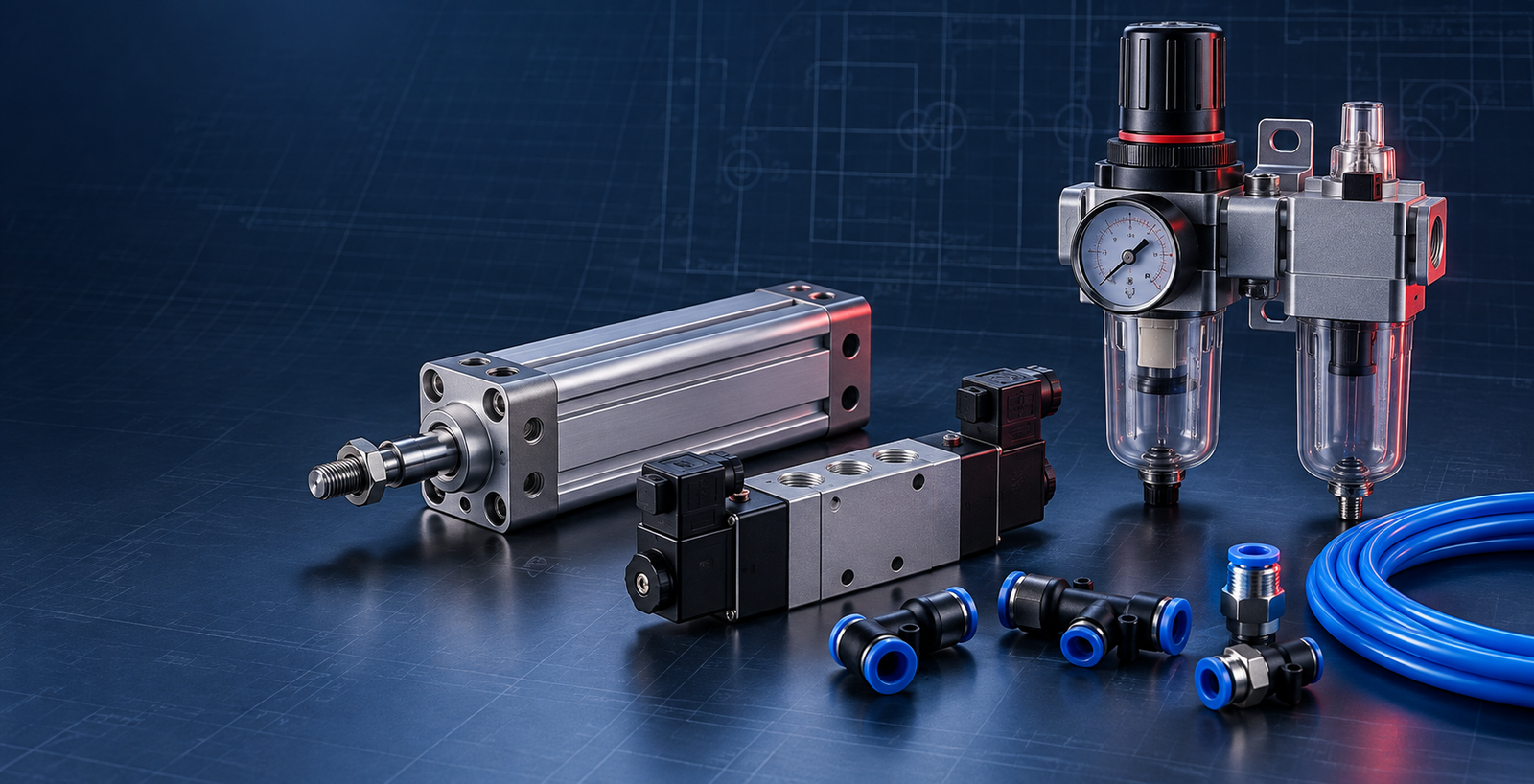
China offers a broad supply base for pneumatic cylinders, valves, fittings, tubing and air preparation products. Getting quotations is usually the easy part. The harder part is confirming that the quoted component matches the machine, performs consistently and can be supplied again under the same specification.
This guide focuses on the practical checks that matter before an order: preparing a useful RFQ, comparing suppliers and verifying product quality.
Products Covered by Pneumatic Components
Pneumatic components are the devices that create, control and distribute motion using compressed air. A sourcing list may include cylinders, solenoid valves, filter regulator lubricator units, push in fittings, tubing, flow controls, silencers and mounting accessories.
In industrial sourcing, cylinders, valves, fittings and air preparation products are normally grouped under pneumatic components or pneumatic parts. Pneumatic tools usually refers to products such as impact wrenches, nailers, grinders and spray guns.
A Four Step Sourcing Process
|
01 Define |
02 Compare |
03 Validate |
04 Order |
|
List the model, size, function and application |
Check equivalent specifications rather than price alone |
Approve samples and agree on inspection requirements |
Record the final specification for repeat production |
Prepare an Accurate Request for Quotation
An incomplete RFQ creates inaccurate quotations and avoidable sample revisions. A photo or model number is useful, but it may not identify every configuration.
|
Product |
Information to Confirm |
|
Pneumatic cylinder |
Type, bore, stroke, mounting, working pressure, sensor and standard |
|
Solenoid valve |
Function, port size, thread, flow, pressure, voltage and connector |
|
Pneumatic fitting |
Fitting style, tube size, thread size, thread standard and material |
|
Air preparation unit |
Port size, flow, pressure range, filtration and drain type |
Also state the expected quantity, target market, packaging needs and operating environment. Temperature, moisture, chemicals, dust and cycle frequency may change the correct material or seal choice.
Compare Suppliers on More Than Price
Some manufacturers have tighter control within a narrow product range. For mixed orders that include cylinders, valves and fittings, a supplier working with several qualified factories can also be practical. In that case, focus on how specifications are controlled, how products are inspected and how consistency is maintained between repeat orders.
Ask which products are made directly, how partner products are inspected and how specifications are kept consistent between orders. Also pay attention to the questions asked before a model is recommended. Pressure, thread type, voltage, dimensions and application can all affect the final selection.
Quality Checks That Matter
|
Component |
Useful Checks |
Common Risk |
|
Cylinder |
Dimensions, stroke, rod movement, leakage and sensor operation |
Incorrect mounting or unstable seals |
|
Solenoid valve |
Switching, leakage, coil voltage, ports and manual override |
Wrong function, voltage or flow |
|
Fitting |
Thread accuracy, tube insertion, release, seal and leakage |
Mixed NPT, BSPP or BSPT threads |
|
FRL unit |
Pressure regulation, gauge, bowl, drain, port and leakage |
Insufficient flow or unsuitable bowl material |
Once a sample is approved, record the model, drawing, materials, labeling, packaging and test requirements. Future production can then be checked against the same approved specification.
Common Sourcing Mistakes
- Selecting a component by appearance without confirming dimensions and specifications
- Comparing prices that use different materials, accessories or testing requirements
- Treating NPT, BSPP and BSPT threads as interchangeable
- Approving a sample without recording the approved configuration
- Placing a large first order before testing the product in the real application
Häufig gestellte Fragen von Käufern
Are Chinese Pneumatic Components Reliable?
There is no single answer based on country of origin. Check the sample, material, inspection process and whether the same specification can be maintained on repeat orders.
Should I Request Samples?
For a new supplier or a new product series, a sample is usually worth testing before bulk production, especially for an important machine application. Check it against the written requirements before approval.
What Should I Send for a Quotation?
Start with the model or drawing, technical parameters, quantity and application. Photos and nameplate details are useful, but pressure, voltage, ports, threads and operating conditions usually determine the final configuration.
Discuss Your Requirements with ATM
If you are sourcing pneumatic cylinders, valves, fittings, air preparation products or related components, send ATM Pneumatic Components your product list and technical requirements. We can check the information, confirm any missing configuration details and prepare a quotation for the project.
Request a quote at atm-pneumatic.com